In slurry handling systems, slurry pump wear parts are the components that wear out the fastest. These parts are in constant contact with solid particles moving through the pump. Over time, this contact causes material loss, reduced efficiency, and the need for replacement. Pumps used in mining, dredging, mineral processing, power plants, and industrial wastewater treatment experience this type of wear daily.
Because these operating conditions are severe, the performance and service life of a slurry pump depend heavily on the materials used for its wear parts. Selecting the right material helps control maintenance frequency, operating cost, and unplanned downtime.
Why Material Selection for Slurry Pumps is Critical
Slurry pump wear parts include impellers, liners, throat bushings, and casings. These components are continuously exposed to abrasive solids and high-velocity slurry flow. Their function is to move slurry efficiently while maintaining stable clearances and flow paths.
When wear parts degrade too quickly, pump efficiency drops, power consumption increases, and maintenance becomes more frequent. This leads to higher operating costs and unplanned downtime.
This is why material selection for slurry pumps is critical to overall system reliability. The material chosen for wear parts directly affects service life, maintenance intervals, and replacement frequency. Selecting an unsuitable material may reduce initial cost, but it often leads to accelerated wear and higher long-term costs.
Experience with Pump and Slurry has shown that proper material selection directly impacts pump performance. Correct material selection for slurry pumps helps extend wear life, reduce downtime, and stabilize operating costs. This article compares three commonly used materials for slurry pump wear parts: High-Chrome Cast Iron, Duplex Stainless Steel, and Ductile Iron. Each material is suited to different slurry conditions, wear mechanisms, and operating priorities.
Understanding Wear Mechanisms in Slurry Pumps
Slurries are difficult to pump because they are not consistent. They contain solid particles of varying sizes, shapes, hardness, and concentrations. These solids are suspended in liquids that may be neutral, acidic, or chemically aggressive. As slurry passes through a pump, multiple types of wear occur simultaneously.
Abrasion is the most common wear mechanism in slurry pumps. Hard particles slide along metal surfaces and gradually remove material. Wear rate increases with particle hardness, size, and concentration. Sharp particles cause faster damage than rounded particles.
Erosion occurs when particles strike pump surfaces at high speed or at sharp angles. This type of wear is common around impeller vanes, throat bushings, and areas where slurry flow changes direction. Higher flow velocity and pump speed increase erosion.
Corrosion occurs when the liquid phase reacts with the metal surface. This weakens the material and accelerates wear. In many slurry applications, abrasion and corrosion occur together, increasing total damage.
Different wear mechanisms require different material properties. High hardness improves resistance to abrasion. Toughness helps prevent cracking from impact. Corrosion resistance is necessary when the slurry chemistry is aggressive. For this reason, wear-resistant metals for pumps must be selected based on the dominant wear mechanisms.
Understanding these wear mechanisms is essential for effective material selection for slurry pumps. Without this understanding, even well-designed pumps can experience premature wear and reduced service life.

Overview of Key Wear Parts in Slurry Pumps
A slurry pump consists of several components that wear over time. These slurry pump wear parts directly affect pump efficiency and reliability and must be replaced at regular intervals.
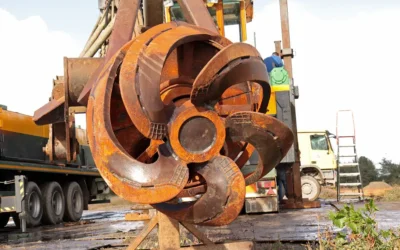
The impeller transfers energy from the motor to the slurry. It is exposed to abrasion, erosion, and, in some cases, corrosion. The material choice for the impeller directly affects wear life and hydraulic performance.
Liners protect the pump casing and guide slurry flow through the pump. They are subject to continuous sliding abrasion and must maintain proper shape and surface condition to support stable flow.
Throat bushings control internal clearances between rotating and stationary components. These parts experience high turbulence and localized wear due to flow direction changes.
Frame plate liners and casings provide structural support and contain internal pressure. Shaft sleeves protect the pump shaft from abrasion and corrosion near the seal area.
Each part operates under different stresses and flow conditions. As a result, material selection for slurry pumps must account for both slurry characteristics and the function of each component. Selecting appropriate wear-resistant metals for pumps requires matching material properties to actual operating conditions.
Material Profiles and Comparisons
High-Chrome Cast Iron
High-chrome cast iron is one of the most commonly used materials for slurry pump wear parts in abrasive applications. These alloys typically contain approximately 25-30% chromium. The high chromium content forms hard chromium carbides within the metal, providing strong abrasion resistance.
This material performs well in slurries containing hard and coarse particles. For this reason, material selection for slurry pumps in mining, sand-handling, and mineral-processing applications often starts with high-chrome cast iron.
One of the main advantages of high-chrome cast iron is its ability to deliver long wear life at a reasonable cost. It offers a balance between hardness and strength, allowing it to resist abrasion under steady operating conditions. It is widely used in mining tailings, sand pumping, and general abrasive slurry services.
High-chrome cast iron also has limitations. It is more brittle than steel-based materials and can crack under high impact or sudden pressure changes. It is less suitable for applications with large tramp material or unstable operating conditions. Its performance also decreases in corrosive slurries, where chemical attack can weaken the metal structure.
A commonly used grade is A05, which contains approximately 27 % chromium. This grade is widely considered the standard choice for abrasion-dominated slurry applications.
Duplex Stainless Steel and Super Duplex
Duplex stainless steels have a mixed ferritic and austenitic structure. This structure gives them greater strength than standard stainless steels and better corrosion resistance. Super duplex grades further improve these properties.
The main advantage of duplex materials is their ability to resist both abrasion and corrosion. In slurry systems where chemical attack is significant, duplex stainless steels often perform better than high-chrome cast iron. This makes them a strong option when material selection for slurry pumps must account for aggressive slurry chemistry.
Duplex stainless steels offer better toughness and flexibility than high-chrome cast iron. This allows them to handle impact loading, vibration, and repeated stress without cracking. They perform well in chloride-rich and acidic environments where corrosion resistance is critical.
Compared to conventional stainless steels, duplex grades provide higher strength and improved erosion resistance. Compared to high-chrome cast iron, they offer better corrosion resistance and structural stability. For these reasons, they are commonly used in chemical-processing slurries, acid-leach circuits, and flue-gas desulfurization systems, where wear-resistant metals for pumps must withstand more than abrasion.
The main limitation of duplex stainless steels is cost. They are more expensive than cast irons and often require specialized manufacturing processes. However, in applications where downtime or component failure has a high operational impact, the longer service life can justify the higher initial cost.
Ductile Iron
Ductile iron differs from standard cast iron because its graphite structure forms as nodules rather than flakes. This structure improves toughness and allows the material to absorb impact without cracking.
One of the main advantages of ductile iron is its ability to handle impact loading and mechanical stress. In slurry systems where operating conditions change or solids strike components, ductile iron can provide stable performance.
From a cost perspective, ductile iron is usually less expensive than high-alloy steels and stainless steels. This makes it suitable for applications where corrosion is limited and severe abrasion is absent.
However, ductile iron provides lower abrasion resistance than high-chrome cast iron and limited corrosion resistance compared to duplex stainless steels. It is not recommended for highly abrasive or strongly corrosive slurries.
Typical applications include moderate abrasivity services, softer slurries, and large pump components where impact fatigue is a concern. In these cases, material selection for slurry pumps prioritizes toughness and structural strength over maximum hardness.
How to Choose the Right Material: Practical Selection Guide
Selecting the right material starts with understanding the slurry. Abrasiveness depends on particle size, shape, hardness, and concentration. Slurries containing sharp, hard particles wear faster than slurries containing softer or rounded solids.
It is also important to identify whether abrasion or corrosion is the main cause of wear. In many applications, both are present, but one usually dominates. This distinction is critical for effective material selection for slurry pumps.
Operating conditions must also be considered. Flow velocity affects erosion rates, while temperature and pH influence corrosion behavior. Pump speed, operating pressure, and duty cycle all contribute to the rate at which slurry pump wear parts degrade.
Material cost should be evaluated over the full service life, not just the initial purchase price. Lower-cost materials often require more frequent replacement and higher maintenance effort. Investing in suitable wear-resistant metals for pumps can reduce downtime and lower total operating costs.
Best practice involves using operating data, wear inspections, and proven field experience. At Pump and Slurry, material recommendations are based on real performance data rather than assumptions.
Real-World Insights from Pump and Slurry
Across mining, dredging, and industrial slurry applications, Pump and Slurry has observed consistent performance differences based on material choice.
In one abrasive tailings operation, replacing standard iron components with high-chrome slurry pump wear parts significantly increased service life and reduced maintenance shutdowns. The improved abrasion resistance led to more stable pump operation and lower replacement frequency.
In another application with aggressive slurry chemistry, duplex stainless steel components replaced failing cast parts. This change improved corrosion resistance and reduced unexpected failures.
These results were achieved by matching pump wear-resistant metals to actual operating conditions rather than selecting materials solely based on initial cost. The consistent outcome is that proper material selection for slurry pumps improves reliability, reduces downtime, and stabilizes operating costs.
Making the Right Material Choice for Slurry Pump Wear Parts
Material selection for slurry pumps is a key factor in controlling wear, maintenance frequency, and operating cost. High-chrome cast iron is best suited for applications where abrasion is the main wear mechanism. Duplex stainless steel performs well in service environments where abrasion and corrosion co-occur. Ductile iron is suitable for moderate-duty applications requiring toughness and impact resistance.
There is no single material that works for every slurry application. The correct choice depends on slurry composition, operating conditions, and maintenance strategy. Effective material selection for slurry pumps requires a clear understanding of wear mechanisms and realistic service conditions.
For operators focused on longer service life and predictable performance, experience-based guidance is essential. Working with Pump and Slurry helps ensure slurry pump wear parts are selected correctly for each application, delivering reliable performance and long-term value.